Hypocaustum
Set within the open landscape of the Mellenberg archaeological site in Tienen, Hypocaustum marks the location of a buried Roman villa discovered beneath the surface. The intervention references the remains of a hypocaust – the underfloor heating system commonly used in Roman bathhouses and villas – that once formed part of the settlement.
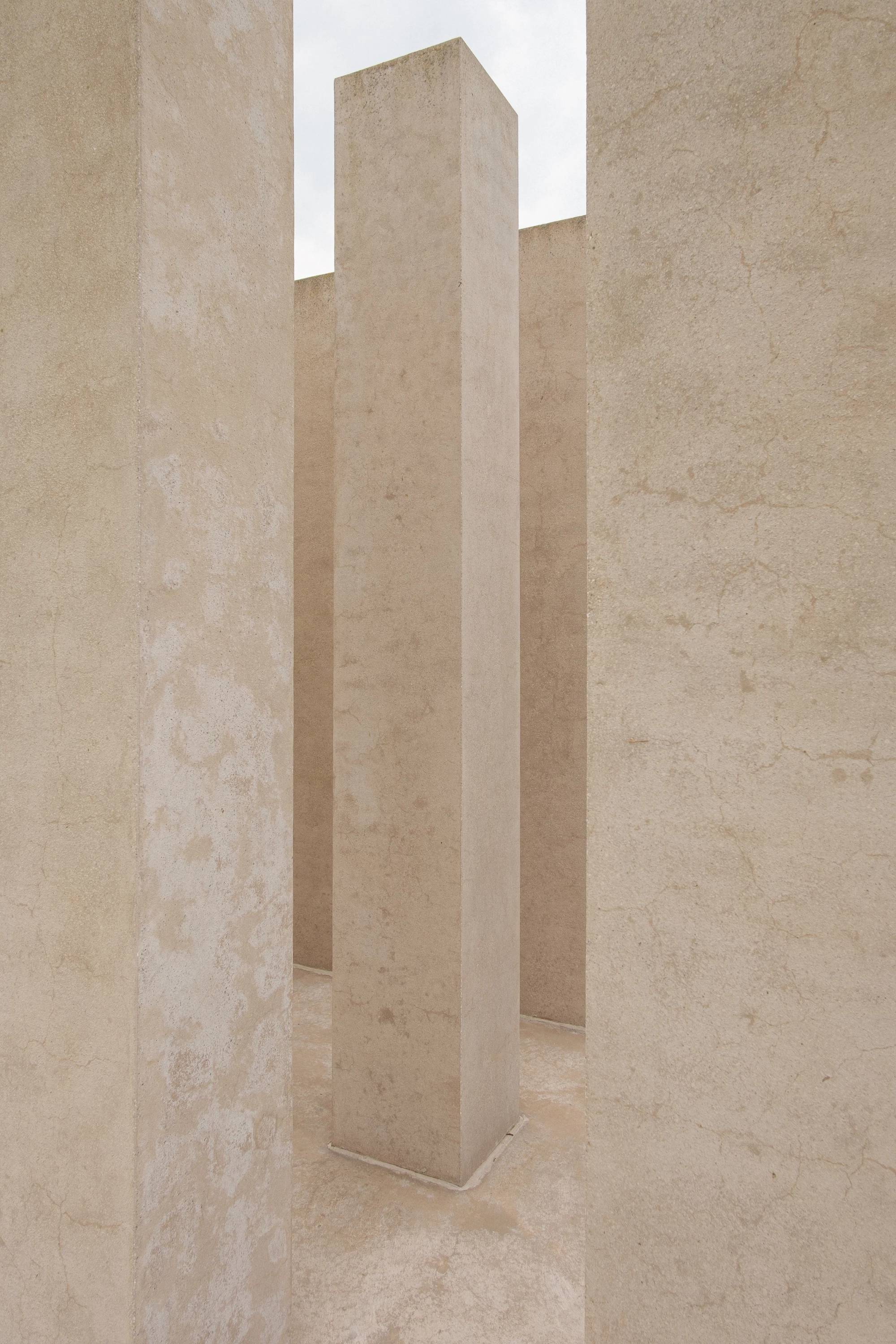
Rather than reconstructing the archaeological remains, the project translates them into a contemporary landmark. Positioned on the crest of a gently sloping hill, the artwork takes the form of a vertical structure whose scale and material presence make the otherwise invisible heritage site legible within the wider landscape.
The work draws its name from the Roman heating system, in which warm air circulated beneath raised floors and through hollow walls to heat interior spaces. By referencing this hidden infrastructure, Hypocaustum engages with the idea of what lies beneath the ground, bringing attention to a layer of history that remains largely concealed from view.
Functioning simultaneously as sculpture, marker and viewpoint, the intervention establishes a new relationship between archaeology and landscape. Visible from a distance, it transforms an otherwise anonymous field into a place of collective memory, connecting the contemporary landscape with traces of its Roman past.